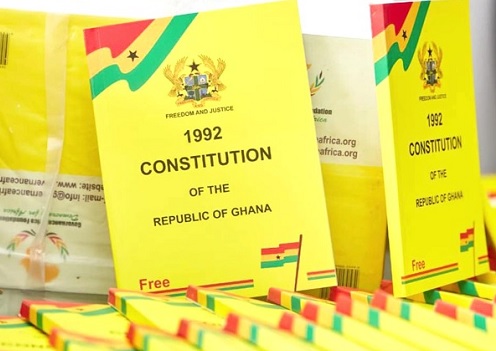
The New Patriotic Party (NPP) has taken its case to Ghana's Supreme Court, asking the justices to settle what the Constitution means when it caps a president at two terms. The suit, reported by Graphic Online, was filed with the Attorney-General listed as defendant and seeks a definitive reading of the term-limit provisions ahead of the 2028 elections.
At the centre of the dispute is whether the limit means two terms in total or two back-to-back terms. The NPP wants the court to declare that the ceiling applies regardless of whether a president serves the terms consecutively or with a gap in between.
Why it matters
The question has direct bearing on President John Dramani Mahama's political future. Mahama has already served two terms, but not in succession, and public debate has swirled over whether he could stand again in 2028. Graphic Online reports that the NPP filed the action to bring clarity to that discussion.
The party's filing, dated July 28, 2026, was lodged by its solicitor, Godfred Yeboah Dame of Dame & Partners. The Attorney-General is named as the defendant.
Beyond the immediate 2028 question, the case touches on how Ghana reads its own founding document. A ruling either way would set a precedent for how term limits are understood and enforced, and could shape the country's political landscape for years.
What the party is asking the court to declare
According to Graphic Online, the NPP is seeking declarations on how Articles 58(2) and 66(1), (2) and (3)(a) of the 1992 Constitution should be interpreted.
Among the reliefs sought, the party wants the court to affirm that the presidential term limit means a maximum of two terms, whether consecutive or non-consecutive. It is also asking the justices to confirm that no person can be elected President more than twice, and that no one can hold the office for more than two four-year terms — eight years in all.
The suit goes further, seeking guidance on the position of a Vice-President who takes over the presidency and serves more than half of a predecessor's unexpired term. The NPP wants the court to declare that such a person would be eligible to contest for election as President for only one term.
The party is also asking whether a person who has already served one presidential term may serve only one additional term, regardless of whether the two are consecutive.
The argument against a looser reading
The filing follows public debate over whether the phrase "two terms" could be read to mean two consecutive terms rather than two terms in total. Under that looser interpretation, the NPP argues, a person who served one term, lost a bid for immediate re-election and later returned to office could serve two more terms.
The party's statement of case describes that reading as a threat to the constitutional framework governing presidential tenure. "Plaintiff considers this proposition not only absurd but dangerous for the democracy, peace and stability of the nation," the statement reads, according to Graphic Online.
The NPP contends that accepting such an interpretation would mean reading words into the Constitution that are not there. "Acceding to this interpretation will condone and sanction manipulation of clear provisions in the Constitution as it involves inserting words into the constitutional text—it will involve amending the Constitution through judicial fiat," the party states.
International comparisons and a 2011 recommendation
The party's arguments draw on examples from outside Ghana. It points to the United States' 22nd Amendment, which limits how many times a person may be elected President, and to constitutional developments in other African countries. The NPP argues that attempts to alter presidential term limits have contributed to political instability in some jurisdictions.
The filing also cites the Constitution Review Commission's 2011 report, which recommended an amendment to make clear that a person who has served two presidential terms would not qualify to stand for re-election.
The case now sits with the Supreme Court, and its ruling will determine how the term-limit question is answered before the 2028 contest takes shape.